Source anti slip plush home socks for living rooms, offices, and bedrooms
Compare 27 listings of anti slip plush home socks featuring breathable, eco-friendly, and thickening options for adults. Buyers can evaluate customization, packing, and seasonal suitability for spring, autumn, or winter use.
Key considerations
Products List








Comprehensive Sourcing Guide
Strategic Sourcing Guide for Anti-Slip Plush Home Socks
Understanding Product Specifications and Material Composition
When sourcing anti-slip plush home socks, buyers must first establish a clear understanding of the technical specifications that define product viability. The core material for this category is predominantly polyester, a synthetic fiber chosen for its durability, moisture-wicking capabilities, and ability to retain plushness after repeated washing. This material choice directly influences the tactile experience and the longevity of the product in a home environment. The construction often involves a combination of handlinking and machine sewing techniques, ensuring that the seams are robust enough to withstand the friction of daily wear while maintaining the soft aesthetic required for home footwear.
The physical dimensions and sizing are critical variables in the procurement process. Market data indicates a wide range of size availability, with common specifications spanning from size 10-13 in US men's sizing to 35-40 in European sizing. Some specialized variants may also be defined by physical dimensions such as 25x18cm, which often correlates with specific weight classes, such as 61g per pair. Buyers should note that weight specifications vary significantly based on the intended thickness; products are available in both "thickening" and "normal" thickness categories, with weights ranging from 45g to 150g. This variance allows suppliers to target different seasonal needs, from lightweight spring and autumn wear to heavy-duty winter thermal socks.
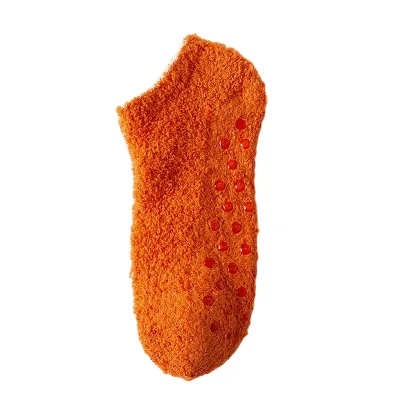
The height and style of the sock are equally defining characteristics. The product landscape includes ankle-length options, knee-high styles, and full-length stockings. The "ankle" style is particularly prevalent for home use, offering a low-profile look that pairs well with indoor slippers or barefoot walking. The "knee" and "stocking" styles cater to users seeking additional warmth or coverage. Furthermore, the "low" and "middle" height classifications provide further granularity for buyers looking to match specific design requirements. The anti-slip functionality is typically integrated into the sole of the sock, utilizing rubberized dots or specialized coatings to prevent slipping on smooth indoor surfaces like hardwood or tile.
Compliance Standards and Certification Verification
Navigating the compliance landscape for textile products requires a rigorous approach to verifying standards and certifications. While the supply chain for home socks often originates from China, buyers must not assume that all listed products automatically meet international safety or environmental standards. The provided data references specific product standards, such as size-based standards (e.g., 35-40, 25x18cm) and packing standards (e.g., 604040CM for cartons), but these are internal manufacturing metrics rather than external safety certifications.
Buyers should explicitly verify if products carry recognized certifications such as OEKO-TEX or ISO 9001, as these are frequently requested in B2B transactions but are not guaranteed by default. The presence of a GOTS (Global Organic Textile Standard) certification would be a significant differentiator for eco-conscious procurement, though this must be confirmed through direct supplier documentation. It is essential to distinguish between product-specific standards, which may relate to sizing or dimensions, and broader quality management systems.
When evaluating compliance, buyers should request test reports that specifically address the "anti-slip" and "breathable" claims. The feature list often includes "Eco-Friendly," "Breathable," "Anti-slip," "Thermal," and "Anti-Bacterial" properties. Each of these claims requires distinct testing protocols. For instance, "anti-bacterial" properties must be validated through microbial reduction tests, while "anti-slip" performance requires friction coefficient testing on standard flooring materials. Buyers should ensure that the supplier provides third-party lab results for these specific attributes rather than relying solely on marketing descriptions. Additionally, the product code 659990000 is a relevant classification for customs purposes, but it does not inherently confer compliance status.
Cost Drivers and Pricing Structure Analysis
The pricing structure for anti-slip plush home socks is influenced by a complex interplay of material costs, customization levels, and order volume. The observed price range in the market spans from $0.36 to $3.65 per unit, a significant variance that reflects differences in quality, thickness, and feature sets. The lower end of this spectrum typically corresponds to standard polyester socks with basic anti-slip features and minimal customization. Conversely, the higher price points are associated with "thickening" variants, specialized thermal properties, and extensive branding options.
Order volume is a primary driver of unit cost. The Minimum Order Quantity (MOQ) varies widely, ranging from as low as 1 piece for sample orders to 5,000 pieces for bulk production runs. This flexibility allows buyers to test the market with small batches before committing to large-scale procurement. However, the unit price will inevitably decrease as the order quantity increases, provided the supplier has the capacity to scale production efficiently. The "High" quality designation often commands a premium, as it implies stricter quality control processes and better material selection.
Customization is another significant cost factor. The availability of customization options, including logo printing, color selection ("Any Colour"), and specific packaging requirements, adds to the overall cost. Suppliers offering "Custom" support and "Logo" customization may charge setup fees or higher unit prices for smaller runs. The packaging method also impacts cost; options range from individual OPP bags to bulk carton packing (e.g., 12 pairs per polybag or brown cartons). Vacuumed packing is another option that may reduce shipping volume but could add processing costs. Buyers must balance the desire for premium features and branding against the budget constraints, ensuring that the total landed cost remains competitive within their target market.
Typical Applications and Market Segmentation
Anti-slip plush home socks serve a diverse range of applications, catering to various consumer demographics and usage scenarios. The primary market segment is the adult population, with products designed as "Unisex" to maximize market reach. The seasonal versatility of these socks is a key selling point, with specific models tailored for "Spring / Autumn" and "Winter" use. The "Thermal" and "Thickening" attributes make them particularly suitable for colder climates, providing warmth and comfort during indoor activities.
In terms of application, these socks are ideal for home environments where safety is a concern. The anti-slip feature is crucial for preventing falls on slippery surfaces, making them a practical choice for elderly care facilities, hospitals, and households with young children. The "Breathable" and "Anti-Bacterial" features address hygiene concerns, making them suitable for extended wear in shared living spaces. The "Disposable" option, though less common for plush socks, may be relevant for specific medical or hospitality applications where single-use hygiene is paramount.
The style variations, including ankle, knee, and stocking lengths, allow for segmentation based on fashion preferences and functional needs. Ankle socks are often preferred for casual home wear, while knee-high styles may be marketed towards users seeking additional warmth or a specific aesthetic. The "Printing" style option allows for decorative elements, appealing to consumers looking for colorful or patterned home textiles. Understanding these applications helps buyers align their product selection with the specific needs of their target customer base, whether it be mass-market retail, specialized healthcare supply, or boutique home goods.
Supplier Evaluation and Quality Control Protocols
Selecting the right supplier requires a thorough evaluation of their capabilities, production processes, and quality control measures. Buyers should prioritize suppliers who demonstrate transparency in their production standards and are willing to provide detailed documentation. The "Sample Time" of 3-10 days is a critical metric for evaluating supplier responsiveness and efficiency. A shorter sample time can indicate a streamlined production process, which is beneficial for accelerating the time-to-market for new product lines.
Quality control should be integrated into every stage of the procurement process. Buyers must verify that the supplier adheres to strict quality standards, particularly regarding the "High" quality designation. This involves checking for consistent stitching, uniform thickness, and reliable anti-slip performance. The "Handlink and Machine" seam construction should be inspected to ensure there are no loose threads or weak points that could lead to premature failure. Additionally, the weight consistency of the product is a key indicator of quality control; variations in weight (e.g., 45g vs. 150g) should be intentional and clearly defined, not the result of production inconsistencies.
Suppliers should also be evaluated on their ability to handle customization requests. The "Support" for customization and "Logo" printing capabilities should be confirmed through sample reviews. Buyers should request samples that reflect the final production specifications, including the exact color, size, and packaging. The "prod_packing" details, such as "1pair/ OPP Bag" or "Brown Carton," should be verified to ensure they meet the buyer's logistical requirements. Furthermore, the "prod_model" numbers (e.g., DL-HS-24, DL-HMS-02) serve as unique identifiers for specific product lines, and buyers should ensure that the supplier can consistently reproduce these models without deviation.
Long-Term Procurement Considerations and Supply Chain Resilience
Sourcing anti-slip plush home socks is not merely a transactional activity but a strategic decision that impacts long-term supply chain resilience. Buyers should consider the scalability of the supplier's production capacity to meet fluctuating demand. The wide range of MOQs (1 to 5,000 pieces) suggests that suppliers can accommodate both small, agile orders and large, volume-driven contracts. However, buyers must assess the supplier's ability to maintain quality and delivery times during peak seasons, particularly for winter products which may experience surges in demand.
Sustainability is another critical long-term consideration. The "Eco-Friendly" feature is a growing demand in the textile industry, and buyers should verify the sustainability practices of their suppliers. This includes the sourcing of raw materials, the environmental impact of the manufacturing process, and the recyclability of the packaging. While the provided data mentions "Eco-Friendly" as a feature, buyers should seek concrete evidence of sustainable practices, such as the use of recycled polyester or energy-efficient manufacturing methods.
The "prod_origin" being China is a common attribute, but buyers should be aware of potential geopolitical and logistical risks associated with international shipping. Establishing strong relationships with suppliers and maintaining open communication channels can help mitigate these risks. Additionally, buyers should consider the flexibility of the supplier in adapting to changing market trends, such as new styles or features. The ability to quickly pivot production to meet emerging demands is a valuable asset in a dynamic market.
Comparative Analysis of Product Variants
To facilitate informed decision-making, buyers can utilize the following comparison table to evaluate different product variants based on key attributes. This table synthesizes the observed data points to highlight the distinctions between various models and specifications.
| Attribute | Variant A (Standard) | Variant B (Thermal/Thick) | Variant C (Lightweight) | Variant D (Custom/Printed) |
|---|---|---|---|---|
| Material | Polyester | Polyester | Polyester | Polyester |
| Thickness | Normal | Thickening | Normal | Normal |
| Weight | 45g | 150g | 61g | Variable |
| Season | Spring / Autumn | Winter | Spring / Autumn | Any Season |
| Style | Ankle | Ankle | Ankle | Knee / Stocking |
| Features | Anti-slip, Breathable | Thermal, Anti-slip, Breathable | Anti-slip, Breathable | Anti-slip, Breathable, Printing |
| MOQ | 3-5000 | 3-5000 | 3-5000 | 1PC (Sample) |
| Packing | 1pair/ OPP Bag | Carton | 1pair/ OPP Bag | Custom |
| Price Range | $0.36 - $1.50 | $2.00 - $3.65 | $0.36 - $1.00 | $1.50 - $3.65 |
This comparison highlights that while the base material remains consistent, the variations in thickness, weight, and features significantly impact the price and intended use case. Buyers should select the variant that best aligns with their specific market requirements, balancing cost, functionality, and aesthetic preferences. By carefully analyzing these attributes, procurement teams can optimize their product portfolios to meet diverse consumer needs while maintaining cost efficiency and quality standards.
FAQs
What materials are used for anti slip plush home socks?
The core material is predominantly polyester, chosen for durability and moisture-wicking capabilities. Construction often combines handlinking and machine sewing to ensure robust seams that withstand daily wear while maintaining a soft aesthetic.
Can I customize the logo and color for these socks?
Yes, customization is available with support for logo printing and any color selection. Buyers should note that setup fees or higher unit prices may apply for smaller runs depending on the specific customization requirements.
What is the typical price range for anti slip plush home socks?
The observed price range spans from 0.36 to 3.65 USD per unit. This variance reflects differences in quality, thickness, and feature sets, with lower prices for standard options and higher prices for thickening or thermal variants.
Which sizes are available for these home socks?
Common specifications include sizes 10-13 in US men's sizing and 35-40 in European sizing. Some specialized variants are defined by physical dimensions such as 25x18cm, which often correlates with specific weight classes.
How long does it take to receive a sample?
The sample time is typically between 3 to 10 days. This metric helps evaluate supplier responsiveness, with shorter times indicating a streamlined production process beneficial for accelerating time-to-market for new product lines.
What features do these socks offer for home use?
Key features include anti-slip soles, breathability, and eco-friendly properties. Additional attributes may include thermal warmth, anti-bacterial protection, and thickening for winter use, ensuring safety and hygiene in indoor environments.